
This past July, friend and writer, Ashley Logan, released her latest collection of poetry, A Body Made of Weather, to rousing success. A visceral and contemplative examination of womanhood, this collection reflects on the last ten years of Ashley’s life and work, reckoning with themes of violence, trauma, and loss while celebrating the feminine experience through meditations on nature, desire, and hope.
Ashley is a #1 Amazon Bestseller in Contemporary Poetry and New Kindle Releases, and following the release of her second collection, agreed to chat with me about her writing process. It’s been a special thing to see her grow not only as a person but as a creative throughout her career. Not only is she a talented writer with a keen sense of imagery and metaphor, but she also has a captivating photographic eye. She is, to say the least, a modern renaissance woman who utilizes her artistic prowess unlike anyone else I’ve ever met. She’s a true visionary, and I’m so excited to see what she does with her vision in her future projects.
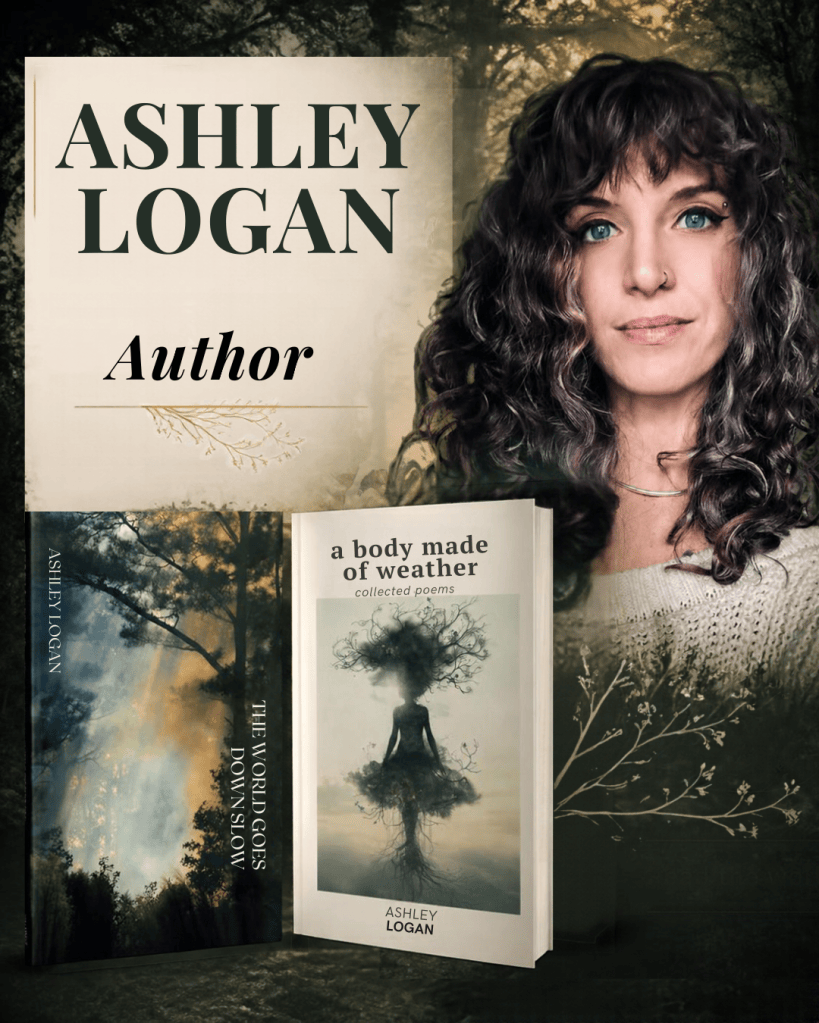
Q| In the foreword to A Body Made of Weather, you mention that some of the poems in this collection are ten years old. For context to readers, your first collections of poetry were Wild Becomes You and Silence is a Ballad. You then went on to publish a chapbook, Chiseled Teeth, and more recently, The World Goes Down Slow. I imagine there are still poems included in this newest collection that have not yet been seen by your readers. That’s so much material, so much life experience and creative energy, to comb through in weaving together this latest book. I’m curious what that process was like for you. How did it feel to revisit writings through an entire era of your life?
A| There was some grief involved to return to some of my earlier work, especially pieces that pertained to my mental health and trauma. It was difficult to remember just how badly I felt for such a long time, to see that pain reflected in my writing, and wishing I could help that version of myself more. There was so much I didn’t know yet — about love, about survival, about myself in general. I didn’t know how strong I was yet either. So I grieved for my younger self when revisiting those pieces and gave space for her to be heard. It was cathartic to be not just the voice behind those words but to also become a witness for them. I can look back and see the trajectory of my life in this collection, what we once jokingly referred to as my very own “Eras Tour.”
The actual process of putting the collection together felt a little like excavating a life. I went back through old files and reread poems I had nearly forgotten I’d written. Some poems immediately announced themselves as belonging in the collection, while others required more patience. There were pieces I loved but ultimately left behind because they belonged more fully to those earlier collections or because I felt they already said what I needed them to say elsewhere.
What surprised me was how much the older work began speaking to the newer work. I wasn’t simply arranging poems chronologically; I was looking for conversations between different versions of myself. A poem from ten years ago might suddenly illuminate something I had written last year or a newer poem might give an older one a context it perhaps didn’t have when I first wrote it. In that way, the collection became less about preserving a timeline and more about tracing an emotional and artistic evolution.
That was probably the most meaningful part of making this book: realizing that none of those selves had to be discarded for the next one to exist. The person who wrote those earliest poems is still part of me, as is the person who wrote the poems in the middle of that journey, and the person I am now. A Body Made of Weather became a way of letting all of them occupy the same space. It felt, in a strange way, like introducing my present self to all of my past selves and saying, “I remember you. I know why you wrote this. We made it here.”
So, although there was grief in the process, there was also an enormous amount of gratitude. I’m grateful that I kept writing, even when I didn’t know where the writing was taking me. I’m grateful that these poems survived their various eras, and that I did, too. Looking through all of that material, I could see how much my understanding of myself had changed, but also how many questions had remained beautifully unresolved. Maybe that’s what a body made of weather is, after all: something constantly changing, carrying evidence of every season it has lived through.
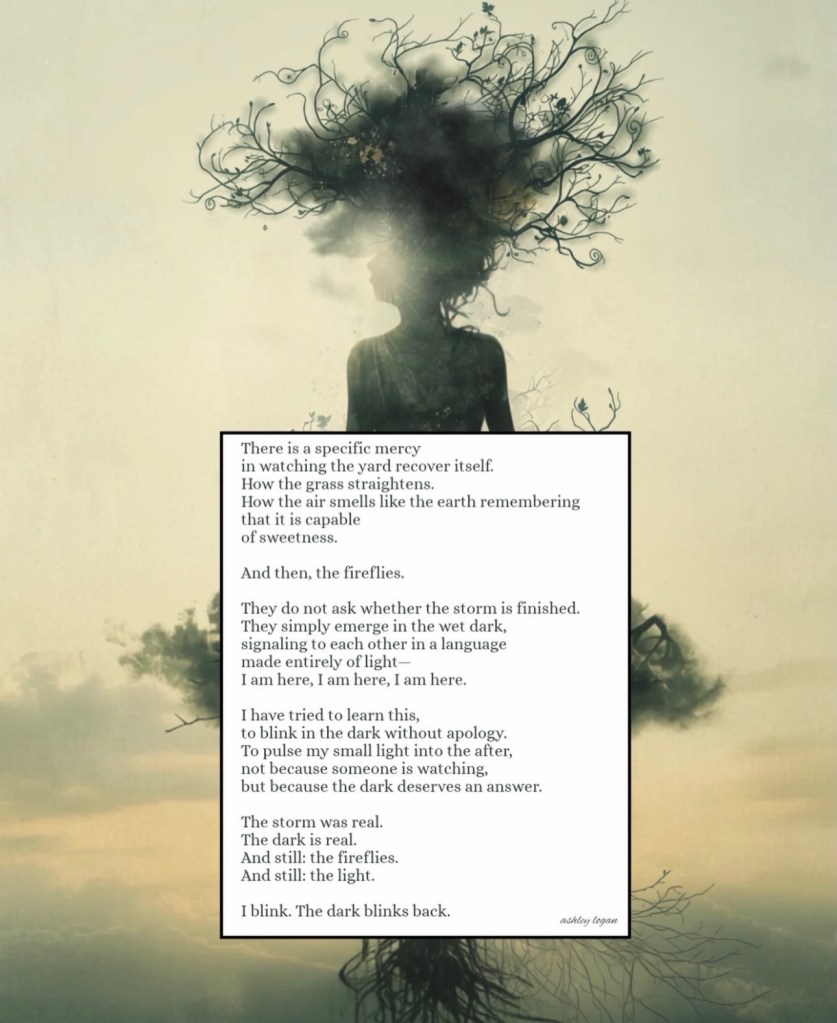
Q| The first installment to A Body Made of Weather is titled “Body/Rupture.” I’m interested in the choice of word pairings, because as I read this first section there is a lot of reckoning with the body, and in some ways that are violent and gruesome. There’s one poem, “Subconscious,” whose opening line, “pickled brain, brined in the skull,” still haunts me. (And I mean that as a compliment.) There is an element of horror in this poem and others that I find intriguing. While others still are gentler, less grisly, softer reflections or epiphanies about your experience with your own body, such as “I Dreamt of a Woman.” What is the personal significance in striking this balance with, not only yourself as a woman, but yourself as a writer?
A| I think the balance comes from recognizing that the body can hold contradictory truths at once. The first installment of this book, “Body / Rupture,” is intentionally visceral because there were periods of my life when I experienced my body as something foreign, something I was trapped inside rather than something that belonged to me. The grotesque imagery in poems like “Subconscious” comes from trying to give physical form to experiences that were otherwise difficult to articulate. I wasn’t interested in scrubbing the blood off the language to make it more comfortable. If the body remembers in tendons and fascia and scar tissue, then sometimes the poem has to remember that way, too.
But I also didn’t want to write a book where the body is only a crime scene or only a site of confusion, of violence or shame. There needed to be room for softness, too, because that is my experience with my body. “I Dreamt of a Woman,” for example, moves toward reclamation and understanding…the same body that once carried shame can also be a body that I inhabit with curiosity, desire and intimacy, and (surprisingly at times), even wonder. That feels important to me as a woman and as a writer. Poetry lets me hold the beautiful and the horrifying in the same hand. I think that’s also part of growing up: realizing that tenderness doesn’t erase what happened to you and horror doesn’t have to be the whole story.
I think that balance has also become part of how I understand my own personal womanhood and part of how I understand writing: I don’t have to choose between the wound and the wonder. I can write the blood and the bloom. Both are true.
Q| In “Juxtaposition,” there is this internal struggle between giving life to your truths and smothering them, and how often our truths contradict themselves, especially in the face of others learning and relearning those truths. In the second to last stanza, there is a line in which you mention “the longing for the wild, overgrown trees” that has stuck with me. Nature has been a major theme across all your poetry collections—you even titled an installment of your book after it—and I’m interested in the healing, cleansing notion it offers in conjunction with its wild and dangerous elements. Nature is a juxtaposition in itself and it is woven throughout the entire poem, and throughout the book as a whole nature plays a major character, which I think makes its significance that much more notable. How did it become such a vital symbol in the way you’ve expressed yourself creatively throughout your career?
A| I think nature became a vital symbol in my writing long before I understood that was what I was doing. I am always trying to figure out where I fit on this earth, and nature is where that question feels both enormous and strangely simple. That feels especially true in “Juxtaposition,” where I’m wrestling with the fact that two opposing truths can exist in the same body at the same time. The wild, overgrown trees in that poem are frightening and beautiful; they offer both danger and belonging. That contradiction is the point. Nature doesn’t ask us to resolve ourselves before we’re allowed to exist.
Rock climbing has taught me something similar (thanks to my husband, who introduced me to the activity several years ago). There is a particular thrill in climbing that comes from how completely it forces you into the present. You become aware of your breath, your body, the next handhold, the exact placement of one foot. Everything else gets reduced to a few inches of rock. Problems that felt enormous on the ground become very small when you are halfway up a wall, hanging there, steadying yourself before you move. There is something cleansing about that kind of perspective.
I found that same perspective when I still lived in Columbia, watching the synchronous fireflies flicker in May at Congaree National Park, when the forest seems to flicker with its own strange electricity. Or when I’d go hiking alone in the mountains, realizing how little the mountain cares about whatever catastrophe I brought with me. I still haven’t escaped that urge to wander through the woods, made easier to accomplish now that I also live on a bird sanctuary. But I think I have been chasing and practicing that juxtaposed perspective since childhood. I remember racing barefoot to the neighborhood pond, crossing hot asphalt and then dirt without stopping because the pond was there and I needed to get to it. There was no metaphor yet. I just wanted the water.
Maybe that is where the wildness began for me: in the instinct to go toward something larger than myself. Nature is beautiful, but it is not gentle. It burns, floods, grows over things, breaks things down, begins again. I recognize myself in that, so maybe that is why nature keeps finding its way into my work. The more I have learned to pay attention to the natural world, the more I have understood that healing isn’t becoming untouched, but rather, it is learning how to belong to the weather of it all.
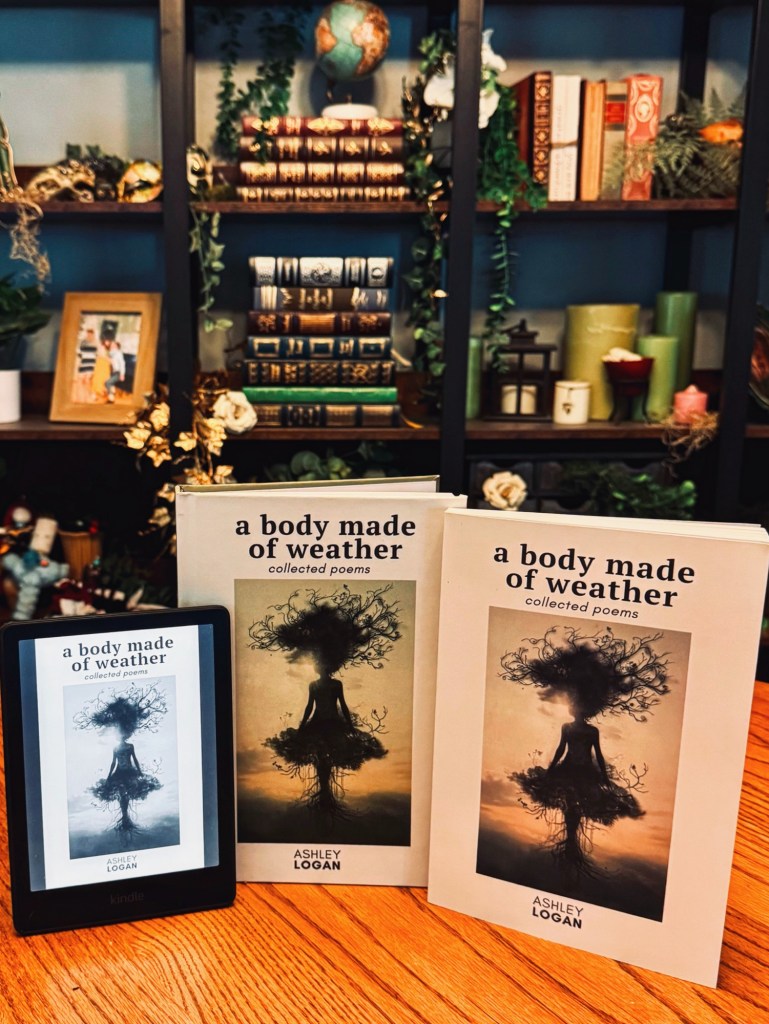
Q| As someone who has minimal publishing experience and certainly not on the same scale as you, I’m interested to know what it’s like for you to bare yourself to the unknown reader. Not during the writing process—I feel like the reader we imagine then is more subjective—but during the marketing stage where the avenues of self-promotion are very loud and over-saturated. How do you approach that side of things as a self-published author? I’m also curious if you will continue to pursue self-publishing or if you’ve considered submitting to agents and presses. I know Chiseled Teeth was published through a small press, so you’ve had the opportunity to experience both. Do you prefer one method over the other?
A| I think poetry is such a niche genre that can be difficult to market, and that has been one of the reasons I’ve gravitated toward self-publishing. But beyond that, poetry is also an incredibly personal form of writing, and there’s something about having a greater degree of control over how the work is presented, shared, and received that appeals to me. Self-publishing allows me to be involved in those decisions and gives me a certain level of insight into every part of the process. I’ve experienced the small-press route with Chiseled Teeth, and I value that experience, too, but for my poetry collections, self-publishing has felt like the right fit.
That said, I do plan to pursue traditional publishing for my novel that is now in its first round of edits. I think different projects call for different approaches, and I’m interested in exploring what that process might look like for a longer work of fiction.
I think one of the interesting things about self-publishing is that it gives you so much ownership over the work, but that ownership also extends to the responsibility of getting it into the world. You can spend months or years writing something deeply personal, only to reach the point where you have to figure out how to talk about it publicly, convince people to read it, and somehow make yourself visible in an environment that already feels oversaturated with people asking for attention. That’s where things get complicated for me.
There’s a real conundrum in wanting to share your work with people while simultaneously wanting to hide from being perceived. Poetry often comes from such intimate places that it can be difficult to separate myself from the work once it’s out in the world. Promoting a book can feel like promoting a piece of yourself, and there’s a vulnerability in that which doesn’t necessarily disappear just because you’ve published before.
I want people to read my work. I want it to find the people who might need it or recognize something of themselves in it. But I don’t always want to be the person standing in front of it, asking people to look. The self-promotion side of things can feel especially strange in an online culture where everything is so loud, constant, and carefully curated. There’s a pressure to turn yourself into a brand these days, when so much of what makes writing meaningful is the willingness to be honest, uncertain, and a little messy.
I’m still figuring out how to navigate that tension. I try to remind myself that sharing the work isn’t necessarily the same as asking people to validate me, even though it can sometimes feel that way. Ultimately, I want the work to have a life beyond me. I want it to belong to the reader in whatever way they need it to, and I’m learning to make room for that possibility without feeling like I have to make every part of myself public in the process.
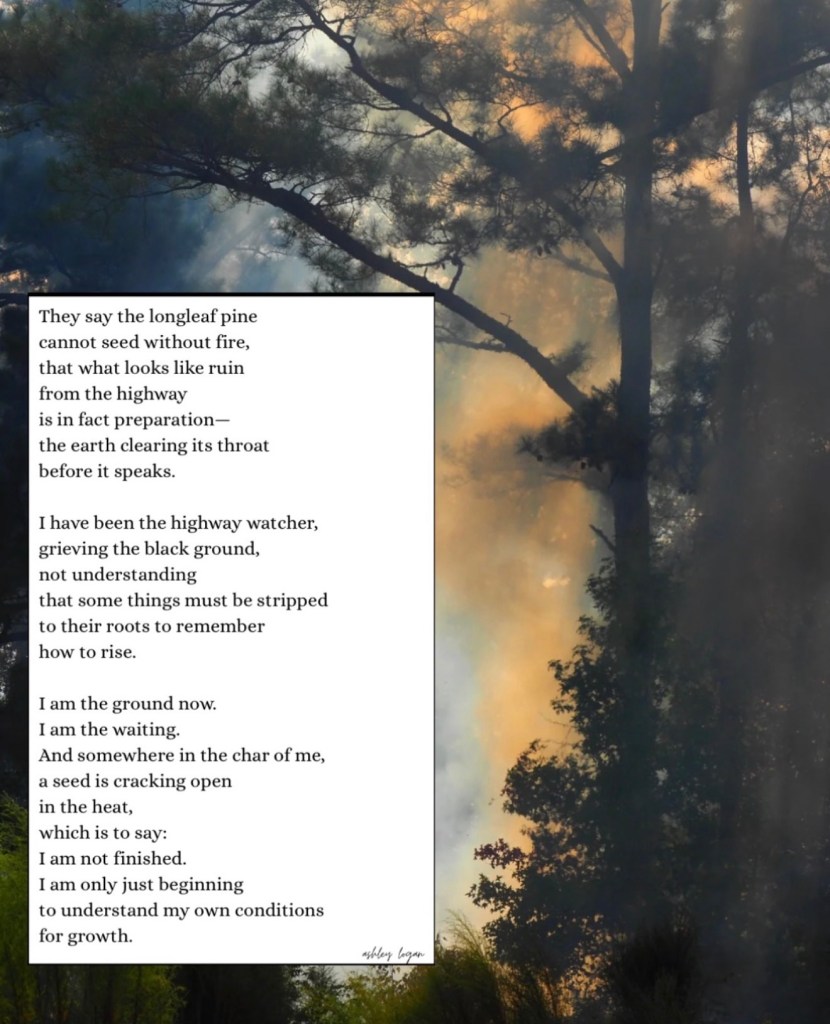
Q| Have any new projects captured your interest for the future? You mentioned a novel. Would you like to share what it’s about and how you came to the idea? Do you see another poetry collection ahead?
A| I think poetry will always be ahead for me. Poetry was my first love when it came to writing, and it’s still what I enjoy writing most. There’s something about the form that feels safe to me, so I imagine I’ll always find my way back to it, no matter what else I’m working on.
That said, I’ve recently turned my attention to something I’ve wanted to do for as long as I can remember: write a novel. After many, many (MANY) attempts over the years, I’ve finally completed a first draft of a full-length contemporary fiction story. I’ve dabbled in short stories and micro-fiction before, but I’ve never quite managed to settle into a story long enough to see it through to the end. I think part of what made this particular story different for me this time around is how deeply personal it is. It’s semi-autobiographical, drawing heavily from my own life experiences, and I approached it in a way that reminds me of one of my major influences—Sylvia Plath’s The Bell Jar—in the sense that I poured so much of myself into the story and its characters. In many ways, writing it has been an exercise in taking pieces of my own life and experiences and transforming them into something that can exist outside of me.
The novel is titled What the Water Kept, and it’s set against the shifting landscapes of South Carolina. It explores the fault lines inside a marriage, the weight of unspoken grief, and the sometimes frightening vulnerability of being truly seen by another person. Through alternating perspectives, it follows two people whose lives begin to shift long before either of them knows how to articulate what’s happening. At its heart, it’s a story about how much of yourself you can lose before something begins to break, what it means when someone else notices the cracks before you do, and how the most devastating truths can sometimes feel like coming home.
Of course, that synopsis is still very much a work in progress. I’m just beginning to think about the first round of edits, so I imagine the story will continue to evolve as I figure out what it needs. I have other novel ideas simmering on the side, too, including a fantasy novel, which will be an entirely different kind of challenge and adventure. But for now, What the Water Kept has my whole heart. After so many years of wanting to write a novel and never quite getting there, finishing this first draft feels like a milestone I’m still wrapping my head around. I’m excited, a little intimidated, and curious to see what happens when I start pulling it apart and putting it back together again.
And somewhere in the background, I’m sure there’s already another poetry collection waiting for me. Poetry will always be there, I think, quietly collecting itself until I’m ready.
Upcoming Events
If you are local to South Carolina and interested in opportunities to meet Ashley, she has several upcoming events over the next few weeks that you should check out.
Visit her website to learn more information.
You can pick up a copy of her books at one of these events or you can purchase them in advance through her online shop.
Visit Ashley’s online shop here.
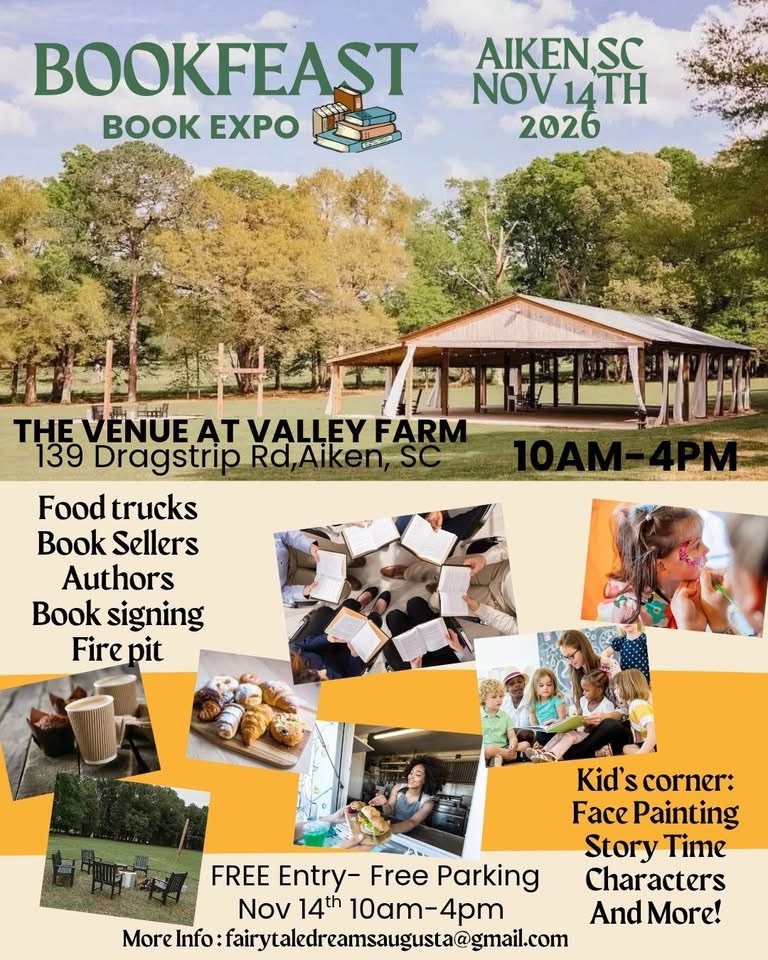
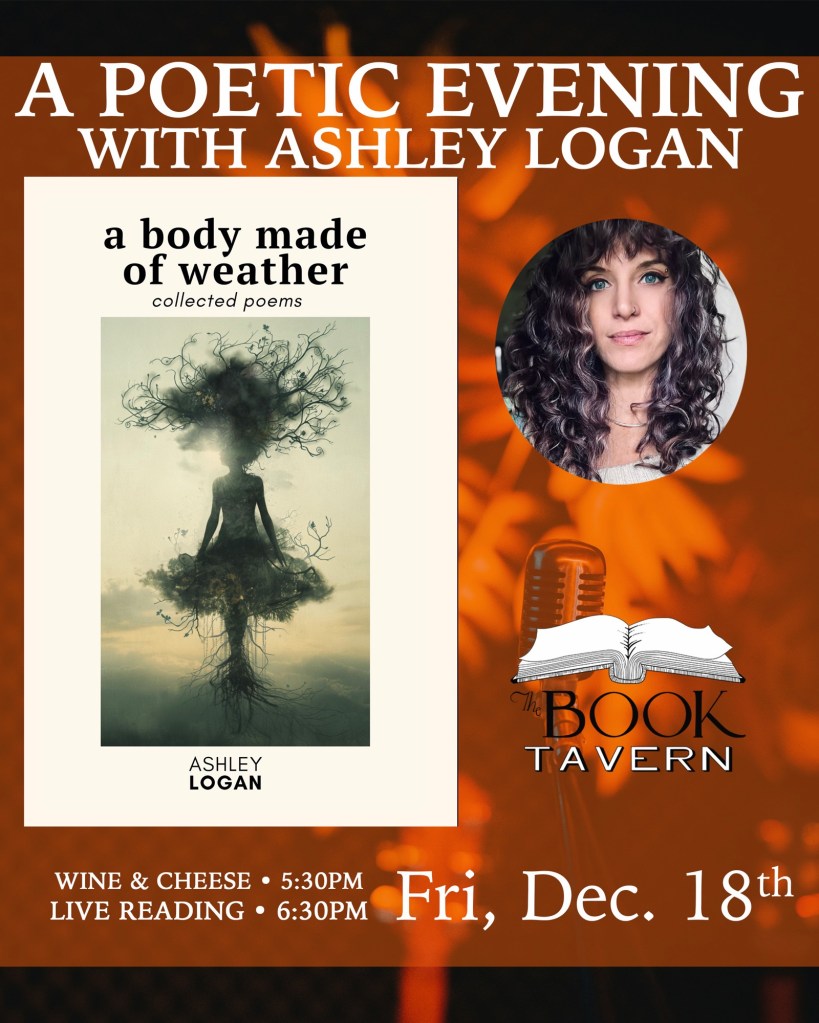
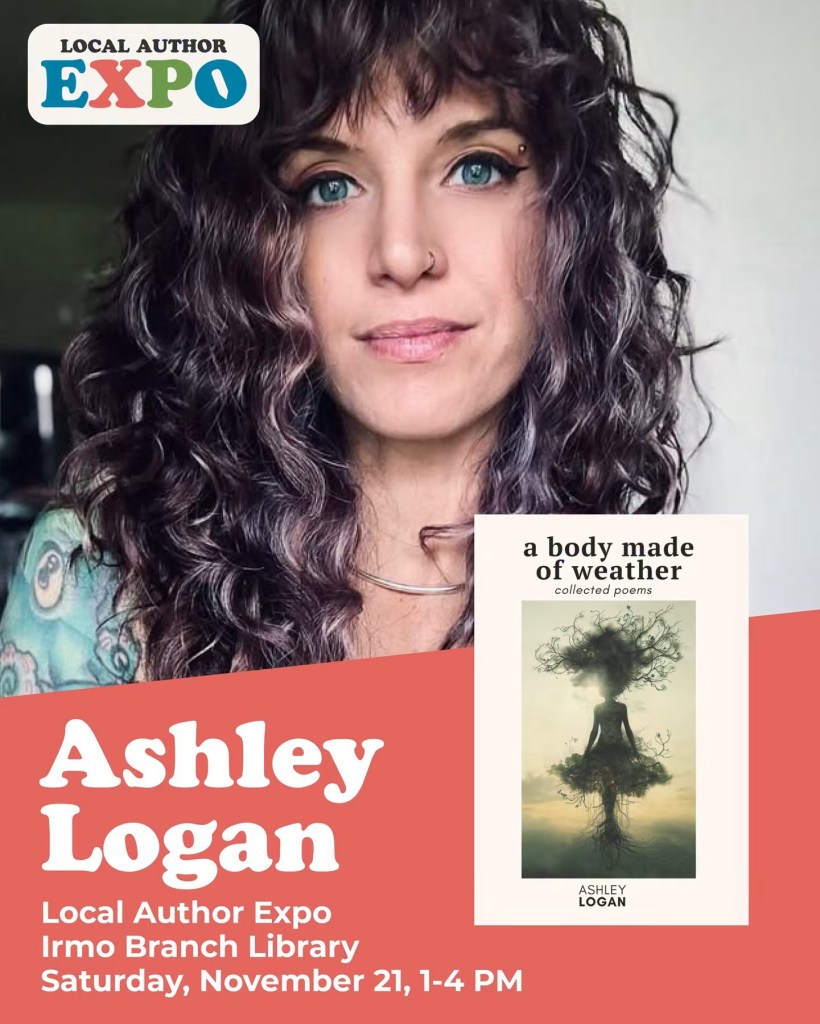
Thank you, Ashley, for taking the time to answer my questions and for providing such thought-provoking insights into your creative practice. I’m so happy to have had an opportunity to discuss your writing and look forward to watching your career unfold—not just as a friend, but as a fellow reader, writer, and longtime fan of your work.
And to our readers—thank you so much for taking the time to read this interview. As with any type of writing, this was a labor of love from both of us over the last several months. We hope it was as fun for you to read as it was for us to bring together.
If you would like to connect with Ashley online, you can find her socials below:
Facebook. Instagram. Threads. Goodreads.
Her books are sold on Amazon, Barnes & Noble, and Bookshop.


